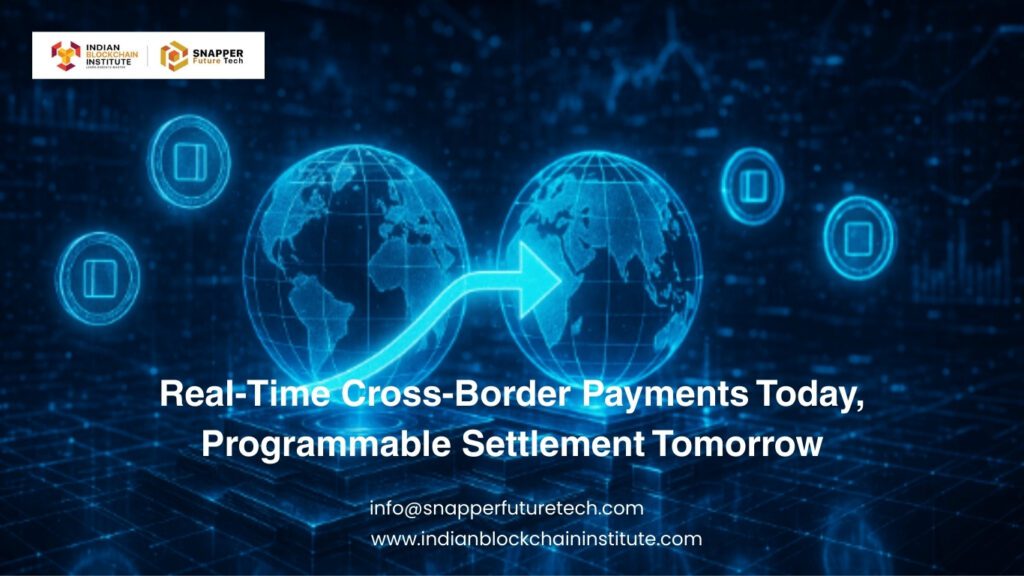
Cross-border payments are undergoing a structural transformation. What began as incremental improvements in speed and cost is now evolving into a deeper infrastructure shift — from faster transfers to programmable, intelligent settlement systems.
The future of global payments will not be defined merely by how quickly money moves, but by how intelligently it settles, complies, and executes conditional logic across borders.
The Expansion of Real-Time Cross-Border Payment Corridors
Over the past few years, real-time payment corridors have expanded rapidly across major financial hubs. Retail users can now send international transfers faster and at lower costs than ever before.
What has improved:
-
Faster transaction processing times
-
Lower remittance fees
-
Improved accessibility through fintech platforms
-
Increased transparency in transaction tracking
However, despite these improvements, most systems still rely on traditional settlement and reconciliation layers behind the scenes.
Speed has improved. Settlement logic has not.
The Limitation of Today’s Cross-Border Infrastructure
Even when payments appear instant, the backend process often includes:
-
Delayed settlement cycles
-
Separate FX conversion systems
-
External compliance and AML verification layers
-
Manual reconciliation between institutions
In other words, while the payment rail has accelerated, the core financial infrastructure remains fragmented.
This gap between transfer speed and settlement intelligence is where the next phase of innovation begins.
CBDCs: Enabling Instant and Final Settlement
Central Bank Digital Currencies (CBDCs) introduce the possibility of:
-
Instant final settlement
-
Direct peer-to-peer settlement between institutions
-
Reduced counterparty risk
-
Lower reliance on intermediary banks
Unlike traditional correspondent banking models, CBDCs can allow central bank-issued digital assets to settle transactions immediately and irrevocably.
This represents a fundamental shift from delayed net settlement systems to atomic, real-time finality.
Programmable Payments: The Next Evolution
Beyond speed and settlement finality lies the concept of programmable money.
Programmable payments can:
-
Automate compliance checks at the protocol level
-
Execute conditional transfers (e.g., release funds upon delivery confirmation)
-
Integrate FX logic within the transaction flow
-
Embed reporting and audit trails automatically
Instead of layering compliance, FX, and reporting on top of payments, programmable settlement integrates them natively.
This transforms cross-border payments from simple transfers into intelligent financial workflows.
The Hybrid Model: Integration, Not Replacement
The future of cross-border finance is not about replacing existing rails entirely. Instead, it is about integration.
The emerging model:
Real-time payment rail + CBDC settlement layer + programmable compliance logic
This hybrid architecture enables:
-
Compatibility with existing financial institutions
-
Enhanced efficiency without systemic disruption
-
Gradual modernization of legacy infrastructure
-
Reduced operational risk
The opportunity lies in orchestrating these layers cohesively — not dismantling what already works.
From Transfers to Intelligent Financial Flows
Cross-border payments are evolving from transactional systems into programmable economic networks.
Future systems will:
-
Embed compliance into the transaction itself
-
Automate conditional settlement
-
Reduce operational friction
-
Enable new business models in trade finance and remittances
What we are witnessing is the transition from fast money to smart money.
Why This Matters for Enterprises and Policymakers
For enterprises:
-
Reduced settlement risk
-
Lower operational costs
-
Faster working capital cycles
-
Improved cross-border treasury management
For policymakers:
-
Greater transparency
-
Enhanced regulatory compliance
-
Stronger financial stability
For fintech innovators:
-
New programmable use cases
-
Embedded financial automation
-
Expansion into cross-border digital commerce
Conclusion: Building the Future of Global Settlement
Real-time cross-border payment rails have improved speed and user experience. But the true evolution lies in programmable settlement powered by digital currencies and integrated compliance frameworks.
The future is not just about moving money faster.
It is about making money programmable, compliant, and intelligent.
Cross-border payments are no longer just financial transfers.
They are becoming smart, integrated economic flows.